

A Surface That Endures: Linen Mounted to Wood Panels
At Ground & Gesso Co., we craft artist supports using the time-honored method of mounting Belgian linen to wood panels. This technique has been trusted by generations of painters, from Vermeer to Cassatt. We will dive into how linen mounted to wood panels became the foundation for centuries of masterworks, and why it remains the gold standard for stability, longevity, and surface control.
What Makes Linen on Wood So Effective?
Linen mounted to wood panels provides unmatched dimensional stability. It resists sagging, stretching, or humidity-induced warping far better than cotton or unsupported canvas. When artists needed a perfectly smooth, still surface for techniques like glazing, scumbling, or impasto, linen on wood gave them that control.

Peter Paul Rubens (1577–1640)
Known for his grand Baroque altarpieces and court commissions, Rubens painted on a scale that demanded structural integrity. He used coarsely woven linen, often stretched over reinforced wooden strainers or panels, and grounded with thick, lead-based primers. According to the National Gallery, London, these preparations gave Rubens the elasticity and strength to build up complex compositions with aggressive, dynamic brushwork, often reworking or layering without fear of buckling. Canvases in his workshop were sometimes glued to a panel for added rigidity, especially when shipping abroad or creating multi-figure designs. The high oil content and layered glazes characteristic of his technique relied on a non-yielding surface.
Best for: Strong brushwork, multi-layer glazing, large-format oil compositions
Reference: National Gallery Technical Bulletin
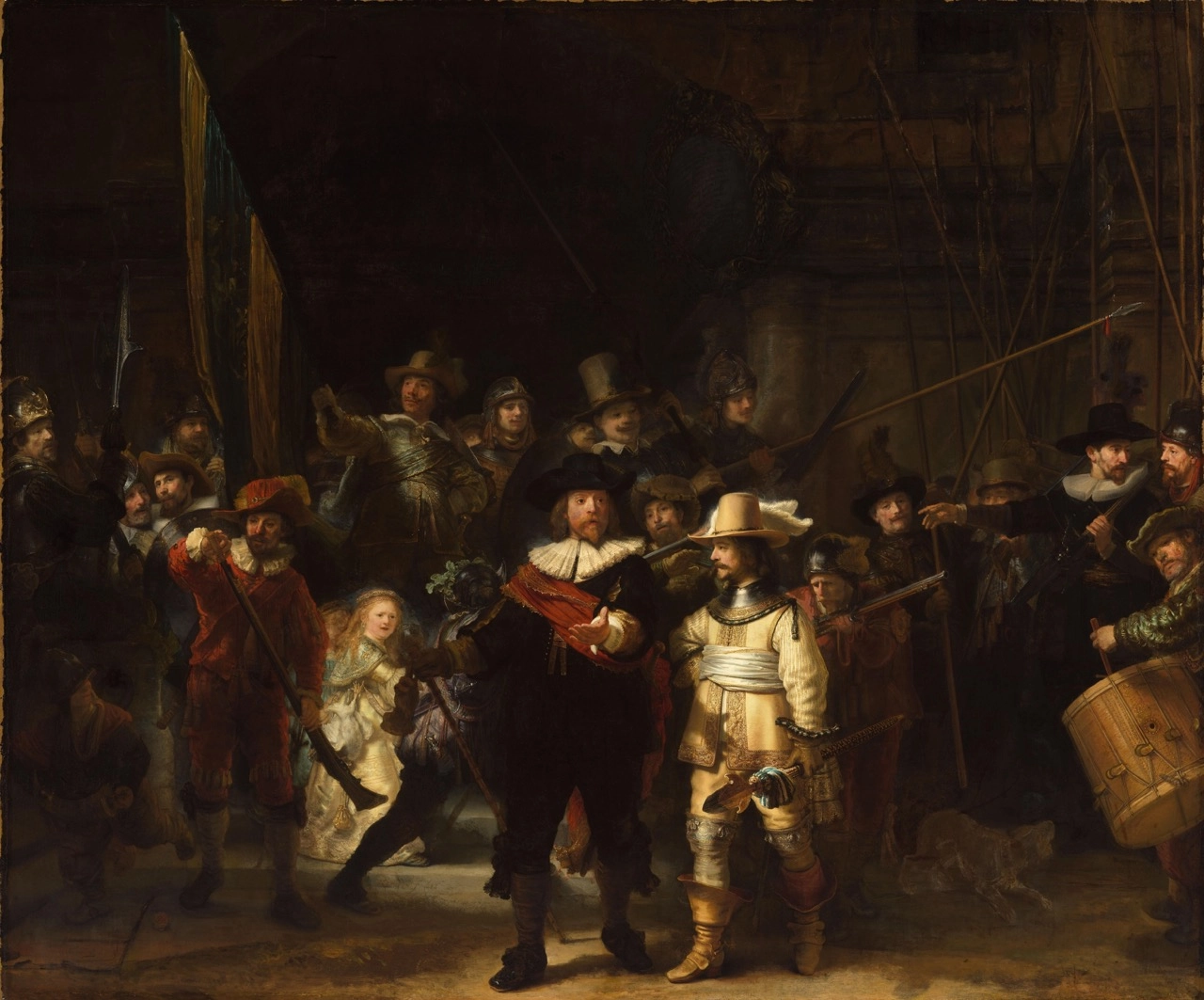
Rembrandt’s, “The Night Watch” (1642)
Rembrandt van Rijn (1606–1669)
Rembrandt van Rijn (1606–1669)
Rembrandt’s deeply textural, thick impasto, scratch-back techniques, and palette knife applications required a canvas with high tension and toughness. From the early 1630s, he increasingly used linen stretched on wooden strainers, a shift from the rigid wood panels of his youth. The plain-weave linen, often primed in the studio with ochre and lead white grounds, held up under the mechanical stress of heavy brushwork and sculptural paint application. Technical analysis from the Rijksmuseum confirms that Rembrandt preferred coarse Belgian linen for its strength and absorbency, allowing him to experiment with dramatic chiaroscuro and three-dimensional texture without compromising the painting’s structural integrity.
Best for: Impasto, painterly buildup, durability under heavy handling
Reference: Rijksmuseum – Rembrandt’s Studio Practice
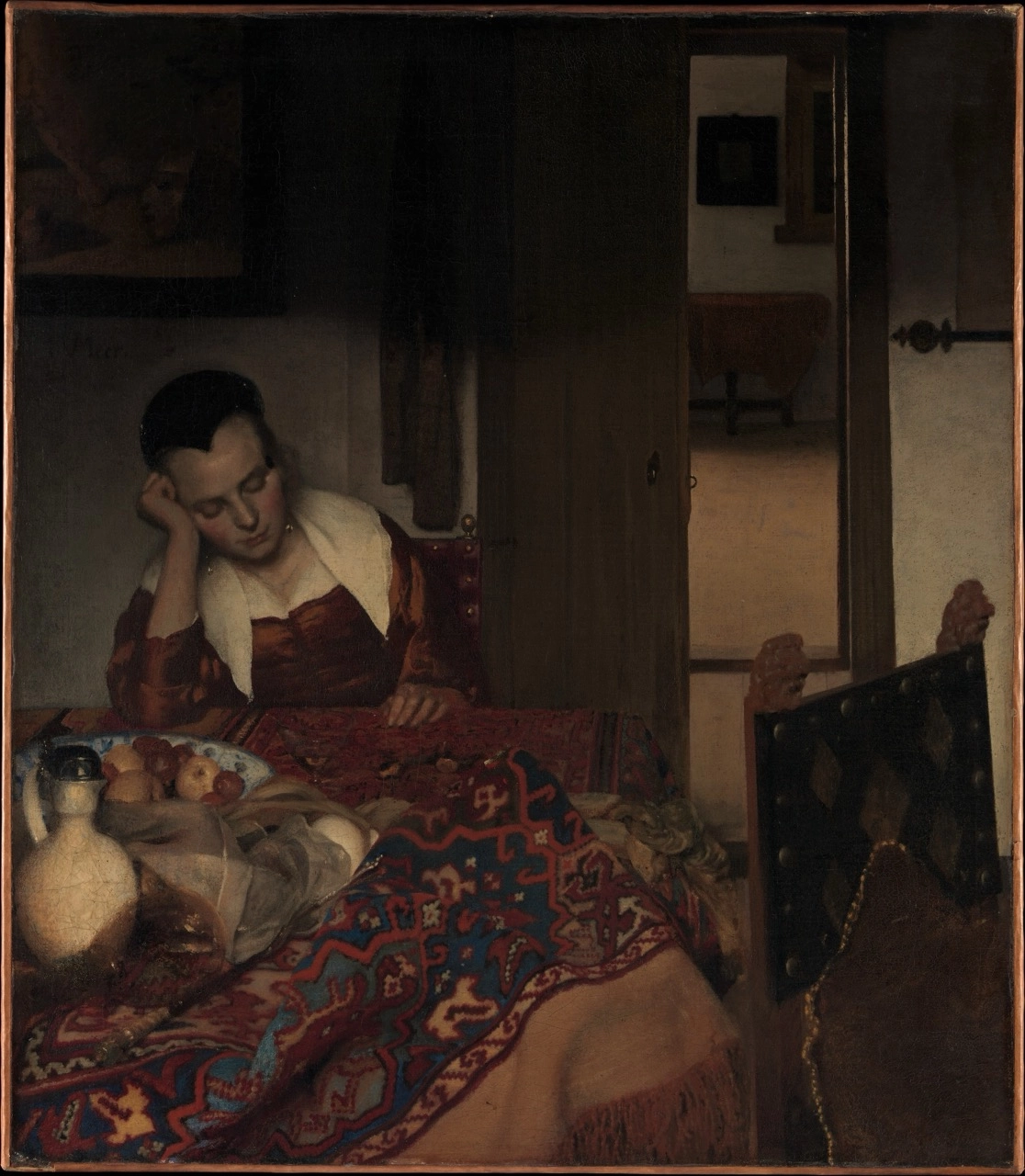
Johannes Vermeer (1632–1675)
Vermeer’s work is synonymous with stillness, clarity, and optical precision. He painted almost exclusively on finely woven linen, stretched across wooden frames and, in some instances, bonded directly to thin oak panels. The uniform thread count and finely absorbent ground provided a perfectly balanced texture, firm yet receptive, which was crucial for Vermeer’s seamless glaze transitions and the exquisite precision seen in lacework, luminous pearls, and soft reflections. Scientific imaging confirms that several of Vermeer’s paintings were cut from the same bolt of linen, often pre-primed with double grounds of chalk and lead white, reflecting his commitment to controlled, archival materials. Only two known works, Girl with a Flute and Girl with a Red Hat, were painted on panel, likely as experiments with faster handling or tighter formats.
Best for: Glazing techniques, luminous skin tones, precision rendering
Reference: Counting Vermeer – Rijksmuseum

Élisabeth Vigée Le Brun (1755–1842)
As portraitist to Marie Antoinette and the European elite, Vigée Le Brun relied on the tactile sensitivity of fine linen supports to capture the shimmer of silk, the delicacy of powdered skin, and the luminous warmth of her subjects’ complexions. Many of her works were painted on Belgian or French linen stretched tightly across wood strainers, primed with warm-toned grounds that harmonized with her limited but rich palette. The Metropolitan Museum documents her frequent use of linen canvas for both small and salon-scale works, which explains the remarkable condition of many of her paintings two centuries later. Her surfaces rarely cracked or sagged, preserving the elegance and serenity of her subjects.
Best for: Portrait realism, skin tones, preservation of delicate brushwork
Reference: Metropolitan Museum of Art – Vigée Le Brun
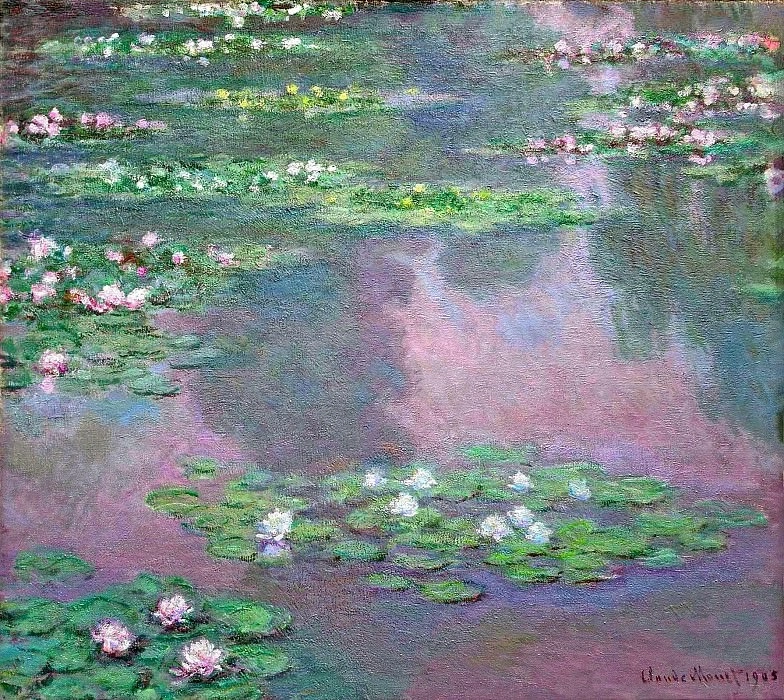
Claude Monet (1840–1926)
As the father of Impressionism, Monet painted the atmosphere itself fast, and often outdoors; therefore, his materials needed to keep up. Monet favored Belgian linen stretched over wooden supports, a choice documented in conservation reports from the Art Institute of Chicago. Linen offered the dimensional stability to tolerate shifting weather and repeated reworking without warping. Conservators found that even after exposure to coastal humidity in paintings like Beach at Sainte-Adresse (1867), the linen’s tension and paint adhesion remained intact, thanks to the quality of the support and the absorbent lead grounds beneath.
Best for: Expressive brushwork, plein air durability, long-term surface integrity
Reference: Art Institute of Chicago – Monet Conservation
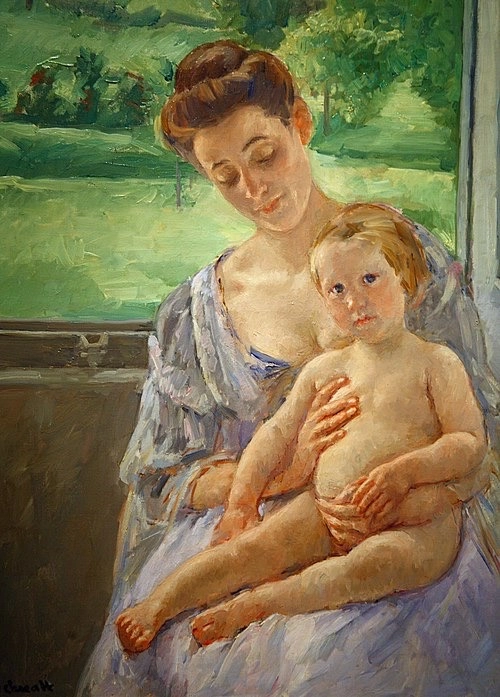
Mary Cassatt (1844–1926)
As an American in the French Impressionist circle, Cassatt brought technical precision to intimate domestic scenes. Her use of finely woven linen canvases on wooden stretchers allowed her to depict tender skin tones and fabric textures with exceptional control. The conservation records from the Art Institute of Chicago reveal Cassatt’s consistent use of Belgian linen, primed with a pale-toned ground that subtly amplified her muted palette and the atmospheric, diffused light that defines her most intimate scenes Her surfaces held delicate brushwork without visible cracking or shift in thin paint applications, demonstrating how the proper support was key to her emotive realism.
Best for: Soft rendering, subtle transitions, controlled tonal work
Reference: Art Institute of Chicago – Mary Cassatt
Best for: Soft edges, subtle tones, stable fine detail
Modern Craft, Historical Precision: Ground & Gesso Co.
We carry this legacy forward at Ground & Gesso Co. Each panel is meticulously handcrafted using Belgian linen mounted to wood, then primed with absorbent, archival grounds designed to support both precision and permanence. So if you are glazing like Vermeer or building texture like Rembrandt, our supports will hold your vision today and for decades to come.
Paint on What History Trusts
If linen mounted to wood panels was good enough for Vermeer and Monet, it’s more than good enough for your next masterpiece. Ground & Gesso panels carry the weight of centuries of craft, so you can focus entirely on creating yours.