
The Story of My Long Hiatus
Sometimes life does not go the way you envisioned, and we find ourselves stuck in a place where tending to our passion is no longer possible. In this post, I share with you why I stopped oil painting for four years. My story is one of blessings that did not manifest in the way I expected, redirecting me on a path of sacrifice and resilience that led me back to my practice. Opening up is a challenge for me, but sharing my experience and the choices I made may inspire you to show yourself grace in your craft.
For years, my life looked vastly different from what it is now. It was the suburban vision of stability. I was a dance mom, balancing rehearsals, traveling for competitions, working 30 hours a week at a library, and I dedicated every Friday to oil painting. I found out I was pregnant, which was a happy surprise, and I had to sacrifice my medium while I hosted a life in my body and while I breastfed for two years. At that point, my marriage was strained, my father’s health was failing, and I became his medical surrogate, and after he passed, the executor of his estate. This became a tedious process that further strained my marriage. I started pouring my creativity into cooking elaborate meals for my family and helping with stage props for the dance team.
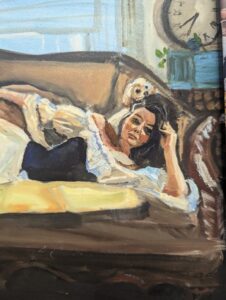
When my marriage finally crumbled, I left my home and moved back to Jacksonville with my best friend. My husband did not take my leaving well and reacted by filing for divorce two months after I left him. I figured out he was making moves and confronted him about talking to a lawyer, and he confessed. I took a photo of myself in grief sitting by my best friend’s pool that day and decided to make a self-portrait from it.
When I got the divorce papers, I was devastated that my husband and his lawyer came after me for everything they could. I had left everything behind at that point and needed to express myself. I bought a cheap oil paint set, a few brushes, and a canvas, and poured my grief into it. I collaged my divorce papers into the background and into the details and captured the pain on my face. I never liked looking at it. I just moved recently and decided to put it on the curb. Someone picked it up almost immediately. So now that pain is hanging in a stranger’s home.
You do not lose the artist inside you. I found other ways to stay in touch with my creativity by improving my watercolor skills while pregnant, or pouring into nourishing meals when my family was in crisis, not having the bandwidth for my lifelong study of oil painting that began as a child.
I was able to get through these challenges while finding other outlets for expression. I want to share with you other lessons and tips that helped me show myself grace in my craft when life leaves no room for a process as involved as oil painting.
I. If You Are Not Falling Behind Sometimes, Are You Living?
We may convince ourselves that productivity equals worth. That our status as an artist is measured somehow by our output. If we don’t meet some preconceived quota, then we are not qualified to call ourselves artists. Creativity is not a nine-to-five job with a lunch break and quarterly reports. You have the power to choose whether you have a micromanaging boss or the most chill and understanding director, who allows you to experiment, fail, learn, and grow because you are in charge. No one can control your practice but you, so why not show grace in your craft and to yourself?
Creativity responds to your feelings of grief, joy, exhaustion, chaos, growth, and understanding. Like fields need to rotate so the soil can rest, you also need time to rest sometimes. After the soil rests and processes, it becomes able to produce the most abundant crops. Unproductive days allow you to process, wonder, be bored, sleep, dream, make memories, make love, cry, live, or just rot and compost the waste life so generously provides sometimes. The messiness in your life can be alchemized into something real and relatable in your artistic expression. Some of my most meaningful work comes from these states.
II. High Standards are Healthy, Punishing Yourself is Not.
There is nothing wrong with having high standards for your practice. Recognizing your worth and knowing what you want is essential to maximizing your potential. Self-sabotage happens when you forget to show grace in your craft. High standards without compassion can result in self-sabotage. We are all messy humans, whether you are causing the chaos from pain or experiencing the chaos of the people you love. Most of the time, artists do not support themselves financially from their craft. Most of us have to balance work environments with schedules and colleagues who can drain creative energy. We all have imperfect loved ones, and we ourselves are just as fallible.
This is why it is up to you to treat yourself with the same compassion you would another artist you respect. Our work is more emotional than the typical job. If you are emotionally raw, rest, take a shower, and reset. You owe yourself clear feedback. Give yourself room to grow without cruelty. Show yourself compassion the same way as you show grace in your craft.
III. You Control the Finish Line
We can be our own harshest critic, and sometimes missing a goal can feel like we are doomed. The empowering thing about being a creator is that what we do is unique to us. No one can make the original work that we produce, and no one has experienced the life that fuelled it. It is better to slowly work past a deadline or pick it back up and keep plugging at it whenever life allows than to give up completely. In reality, you can move the finish line to wherever you want. So reset it, shift it, rebuild it with the knowledge you gained from the experience.
When you are thrown off, allow yourself to breathe, pause, and regroup. When you are ready and able, return with intention. When you do have the energy, it’s the opportunity to lean into Grit as I discuss in another post. Grace sounds soft, but it’s a strategy to maximize your potential.
IV. When You Do Not Know What to Do, Clean Your Creative Space
When I have the time but feel lost, or if I lose something I need that has me feeling stuck, cleaning my studio has rescued me many times. Pouring yourself into thoughtless, mundane tasks that are necessary to progress in your work is a great way to move forward when you are feeling uninspired. When I organize by brushes, I know where everything is. When I clear the table, I have space to work. When I can’t find something, I always do when I am cleaning. It is practical and an allegory to the mess inside your head.
A new tube of paint always excites me. If you organize your paints you can see what colors you are running low on. Or try a new color, as I did recently when I ordered a tube Gamblin Colbalt Teal when I wanted to try a CMYK color palette. A fresh tube of paint can be the spark that puts you back into your groove while simultaneously showing grace in your craft by treating yourself.
V. Nourish Your Art Like a Relationship
Healthy relationships require the same thing as your practice. Both need consistent attention, novelty, and intimacy. Seduce your ideas like a lover. Invest in quality materials for those special projects so it feels good in your hands. Painting on an Oil-Primed Linen Panel feels that way. It is supportive, does not warp the way life sometimes does, and has a luxurious surface you want to linger on and enjoy the texture.
When you treat your project with devotion and care, with the materials it deserves, the process becomes more fulfilling, and the result is even more satisfying. It is in your control to make the grace in your craft sensual.
VI. When Your Confidence Escapes You, Your Skills Remain
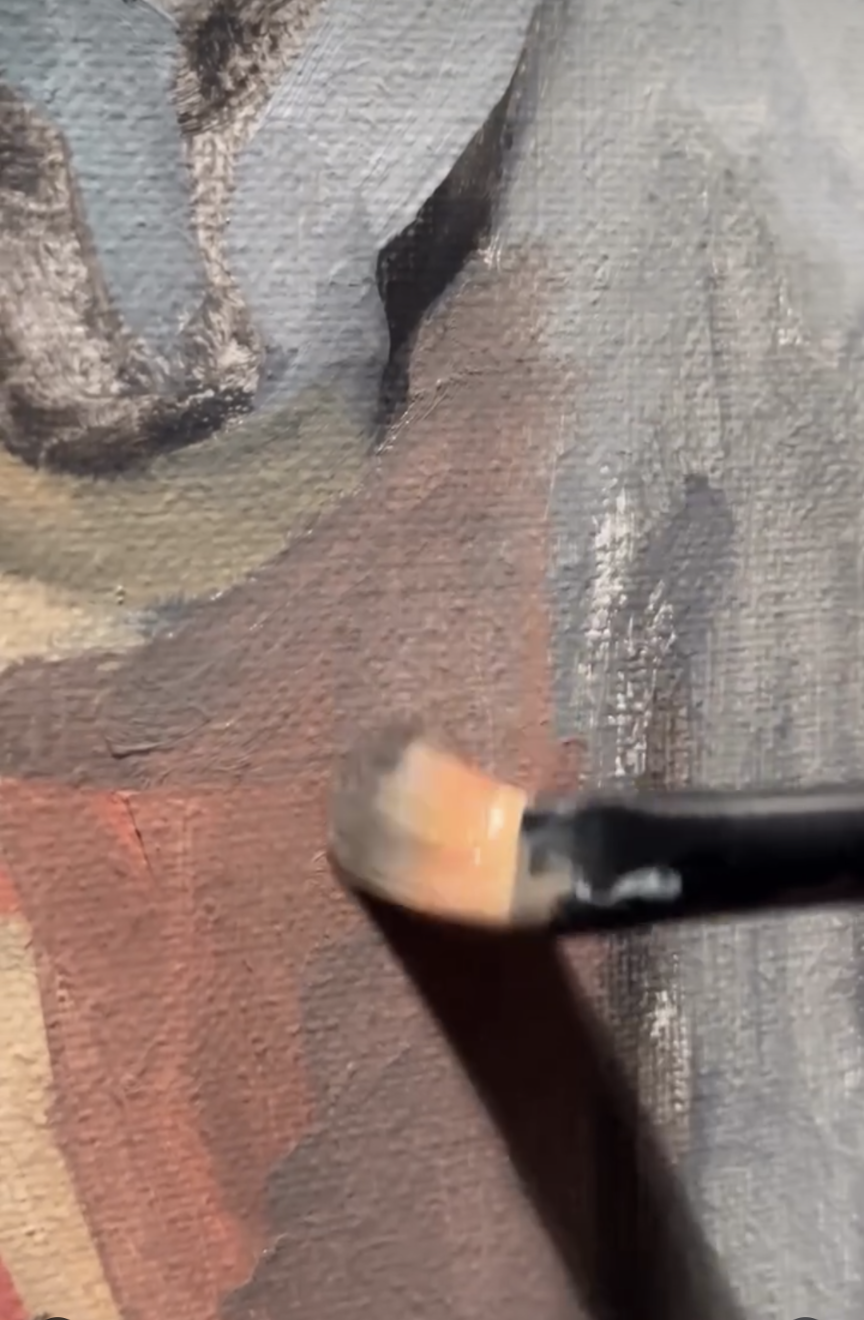
Picking up my brush after four years felt awkward the first time. Like running into an old friend who has not been a part of your new life. But jumping in through the discomfort is the best way to deal with this anxiety. Soon, my muscle memory took over, and my instincts and years of training returned to me. That little push past shyness helped me quickly rebuild my skills and trust in myself through repetition. It is worth incorporating it back into my life and the journey I have been on since has taken me farther than I could have imagined in my old life.
VII. Your Work Can Save You
Creating will not solve all your problems, but it will give you moments of quiet focus and steady your hands while the world is screaming. It gives you a safe outlet to release the pressure in a healthy way. It gives your grief a somewhere to stay, and your joy a home. It will support you in transitions when everything else feels off balance. Show yourself grace in your craft, and the pressures of discipline become softer and more manageable.
Finding my Purpose
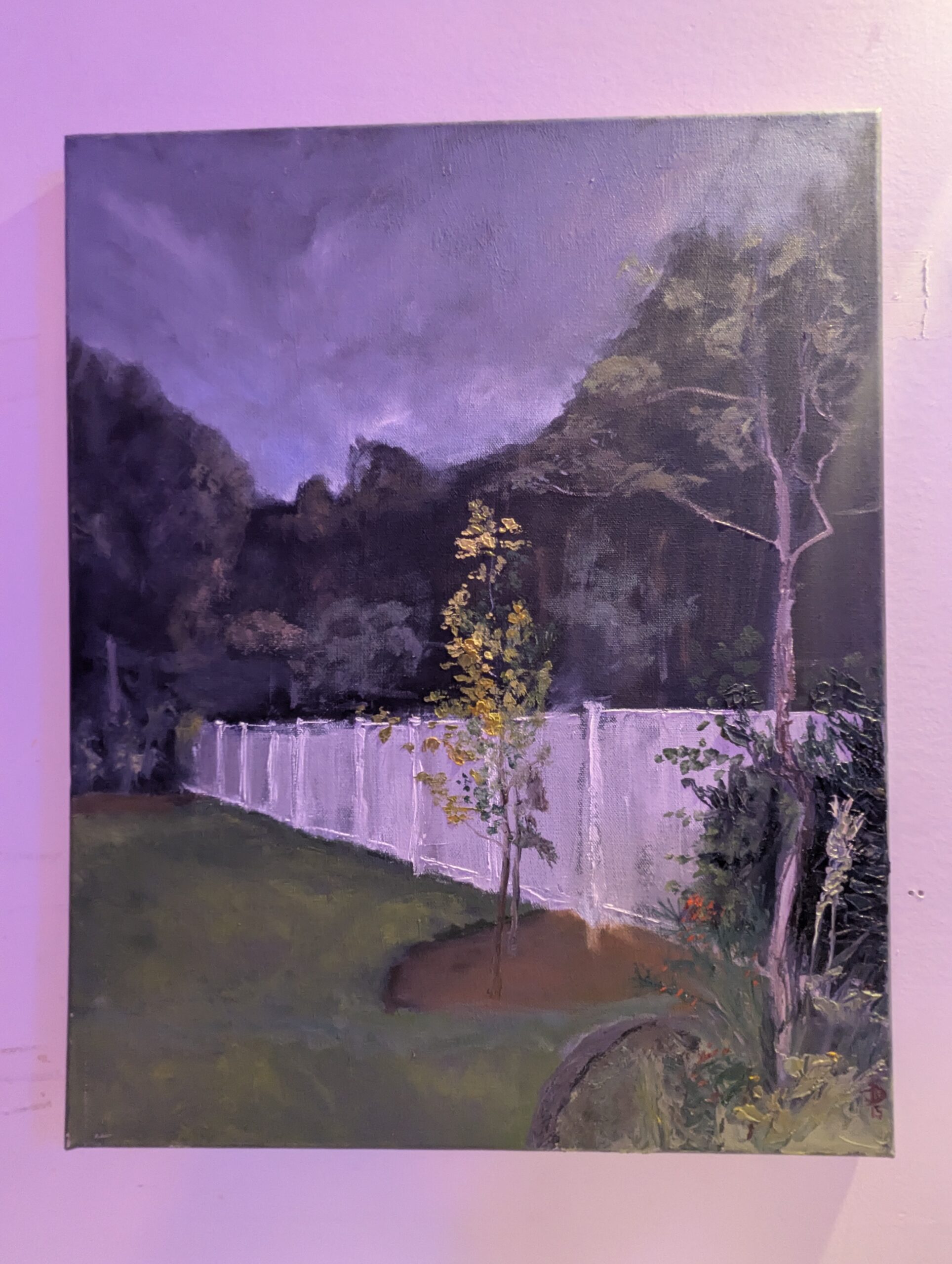
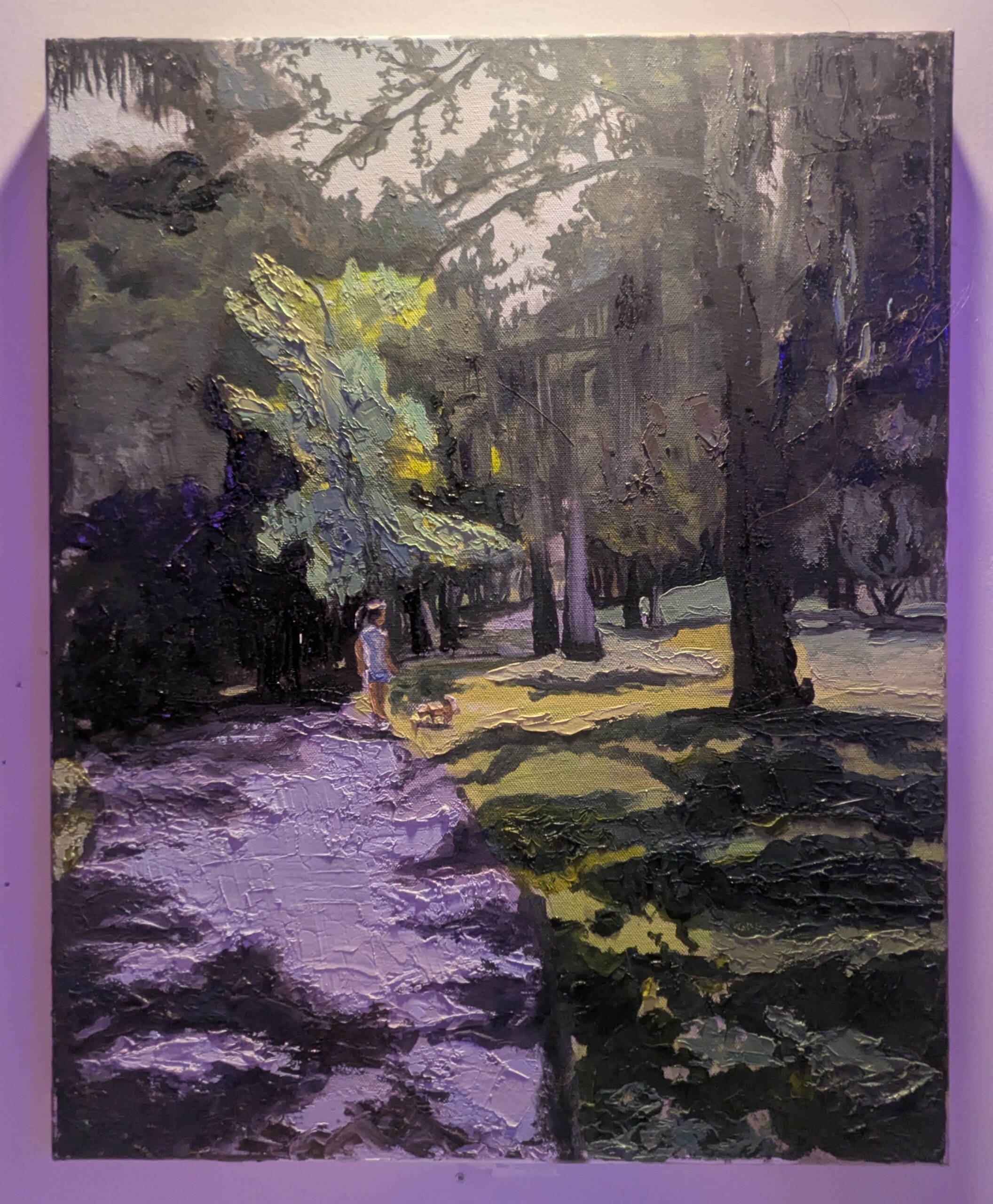
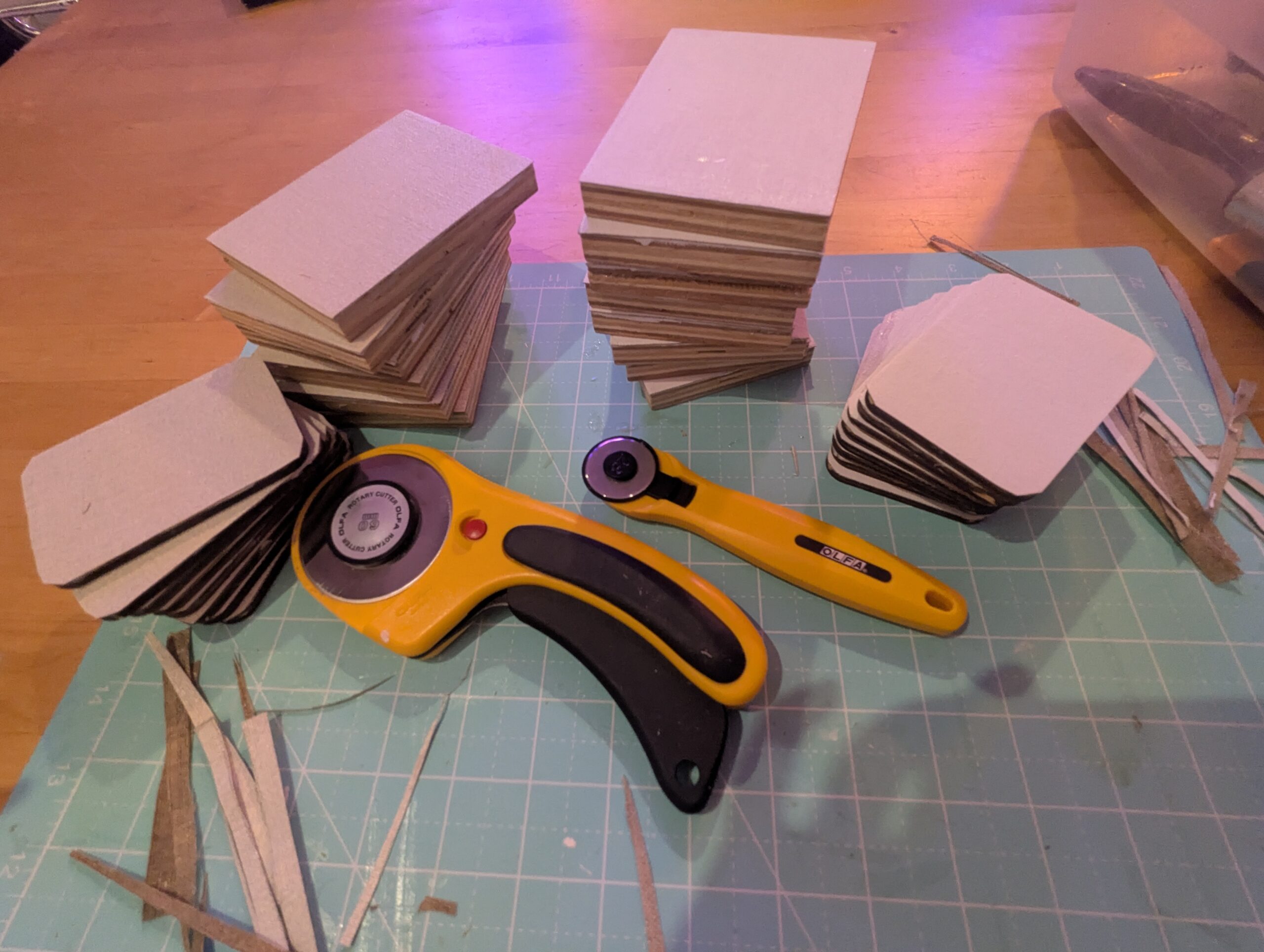
My life today is very different now that I am divorced and living back in Jacksonville. I have experienced many transitions that have been beautiful and painful, but ultimately led me to my true identity. I am an artist, and I always have been, and now I am at a place where I feel like I am living my true purpose, and not for what others think. I focus on mundane tasks when I lack the motivation to pick up a brush. I am not worried about the six unfinished paintings stacked in my studio because I know I will finish them when the opportunity allows. I have learned much in the past year, such as the importance of involving yourself in a creative community, operating websites, the importance of investing in quality supplies, and having a dedicated space to create. My creativity is no longer something I have to squeeze into my schedule, but has become a priority in my life. You’re an artist, and your sensitive nature is not a weakness. The ability to feel deeply gives you the opportunity to relate to others through the work that you make. Your work will wait for you and welcome your return. You can choose self-compassion over shame every time.
Grace in your craft is what feeds the fire inside of you and allows you to come back to yourself.